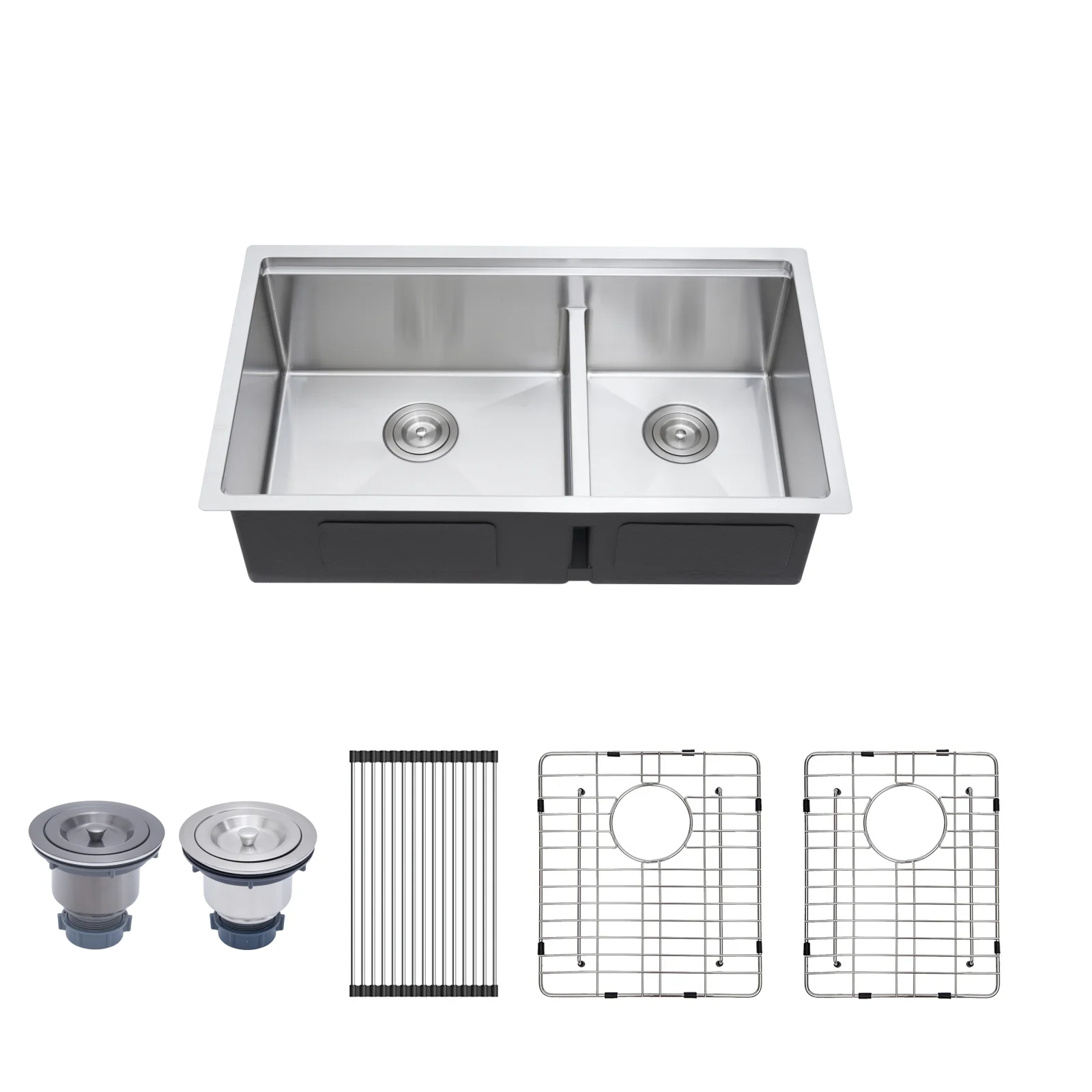
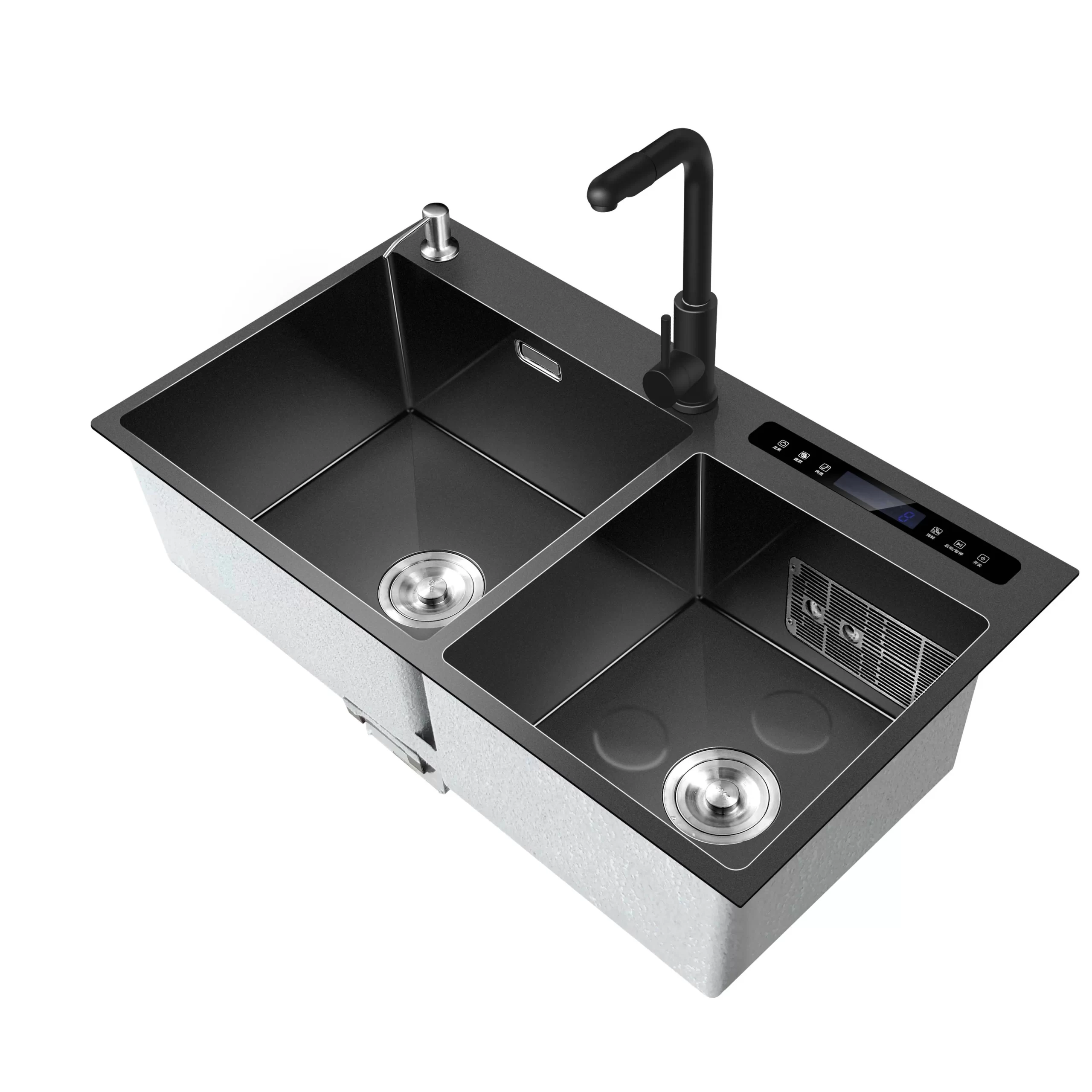
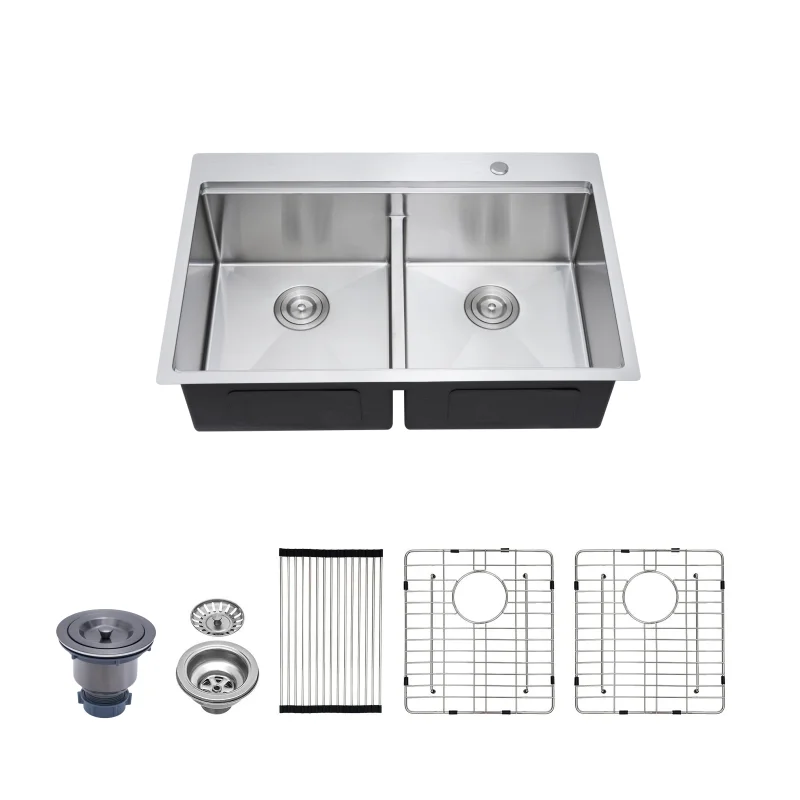
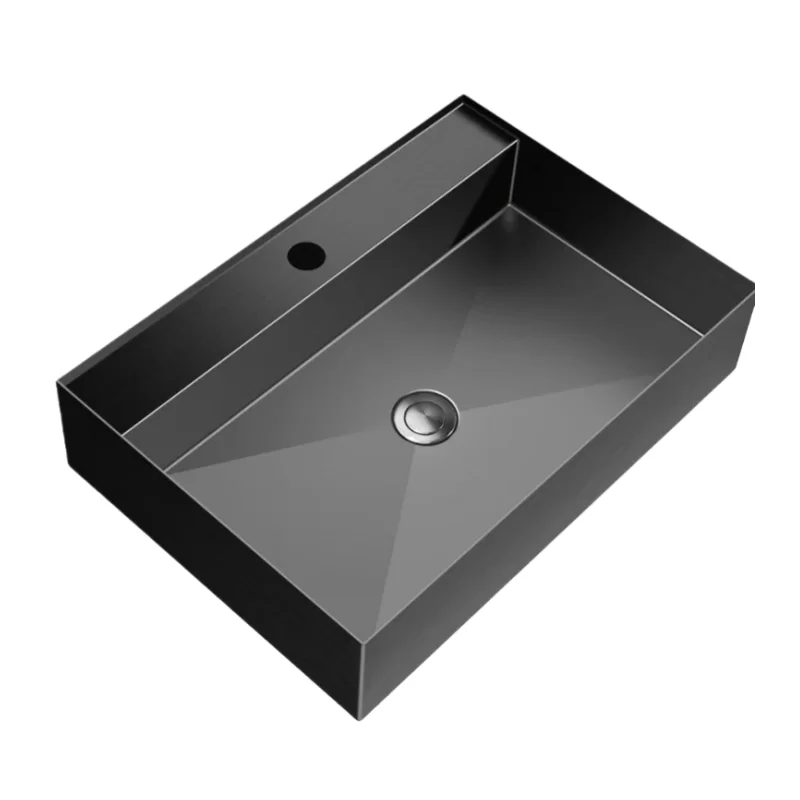
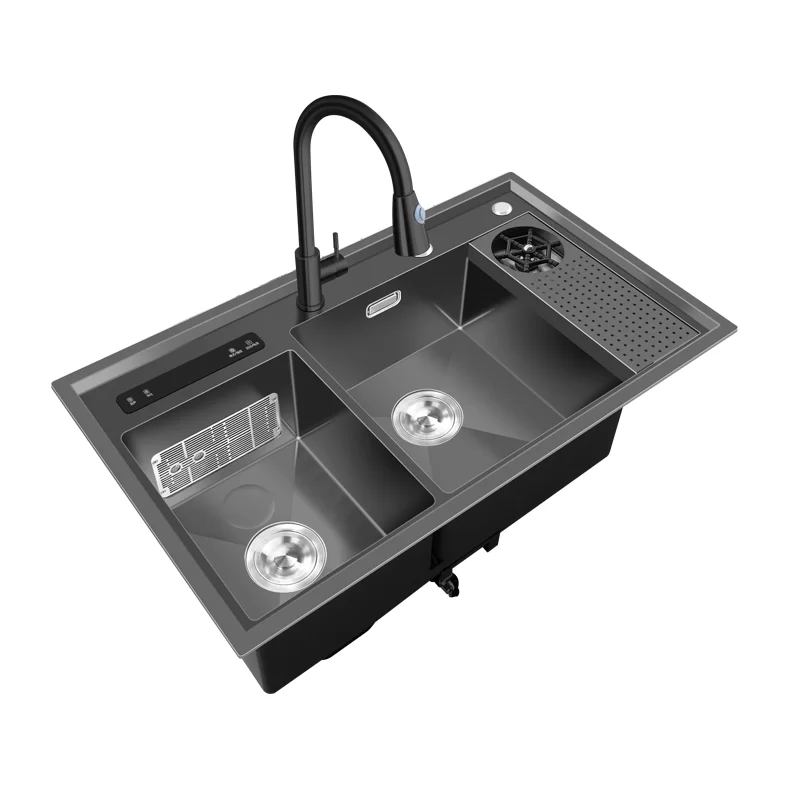
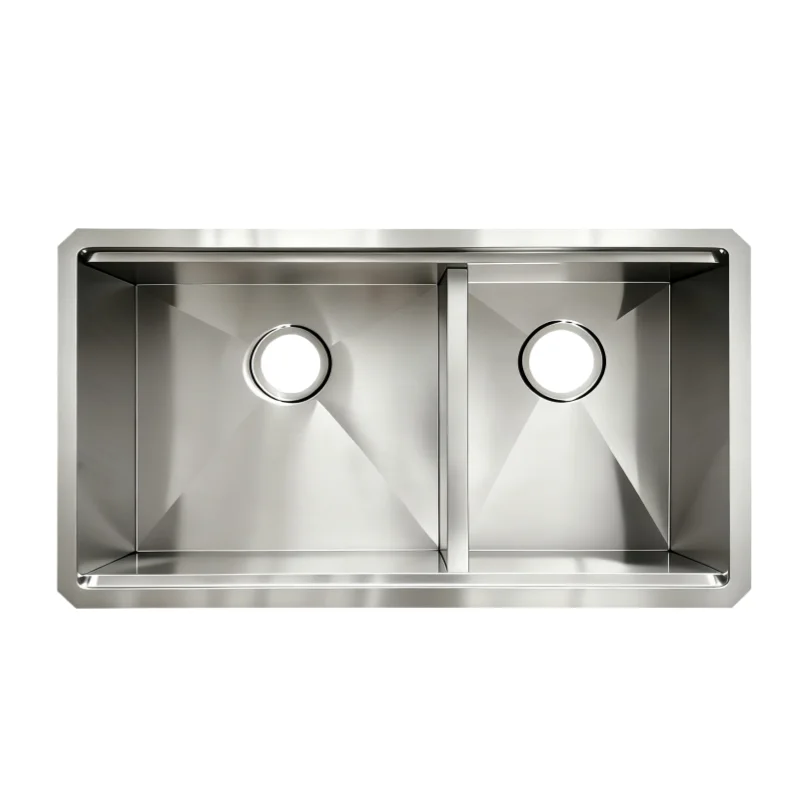
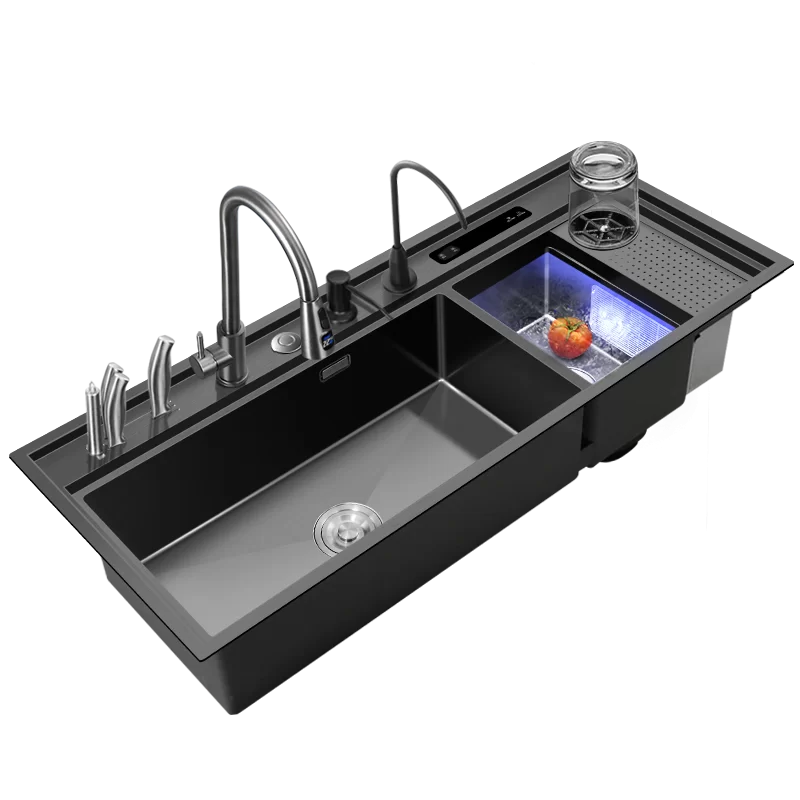
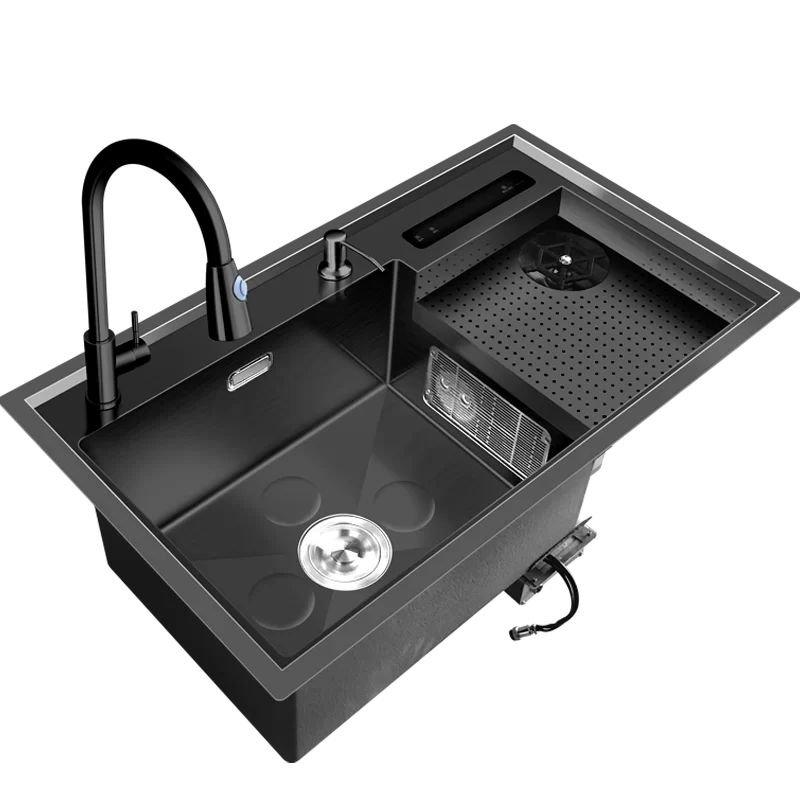
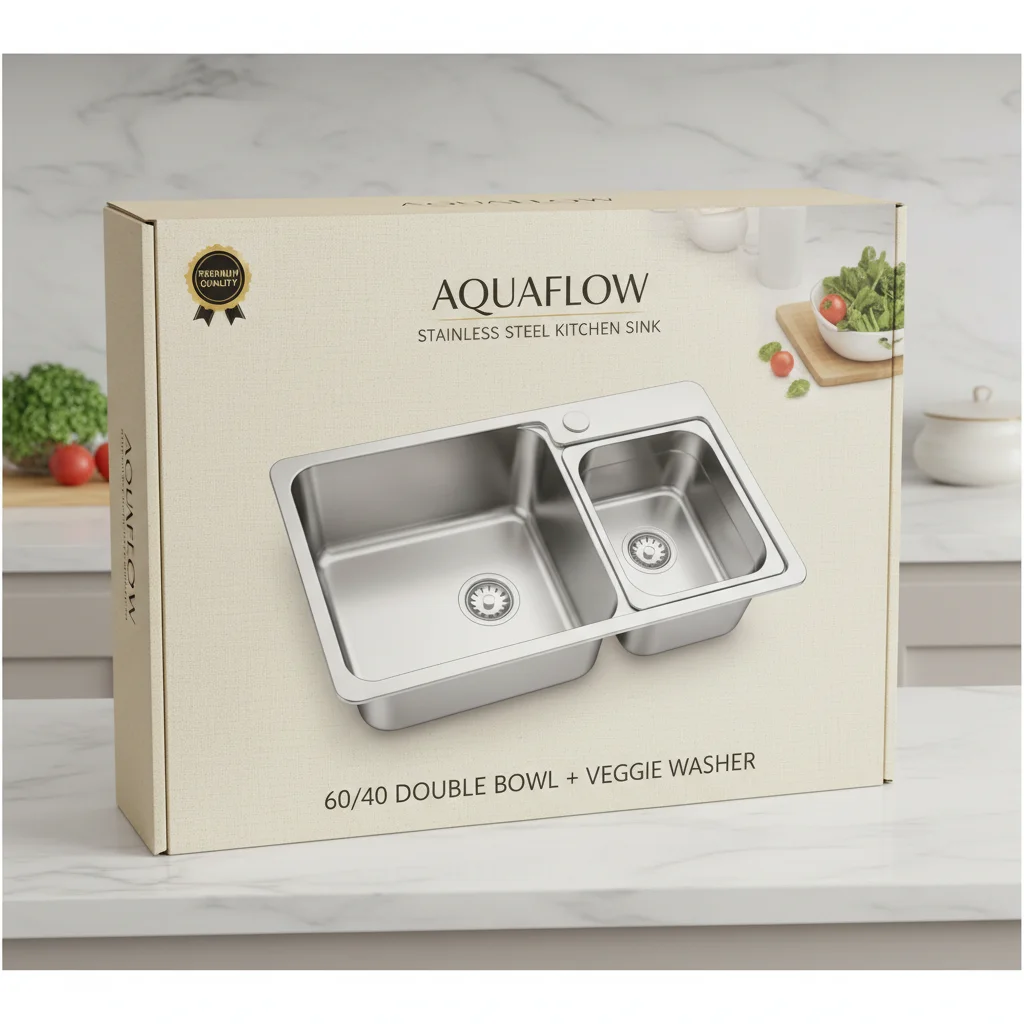
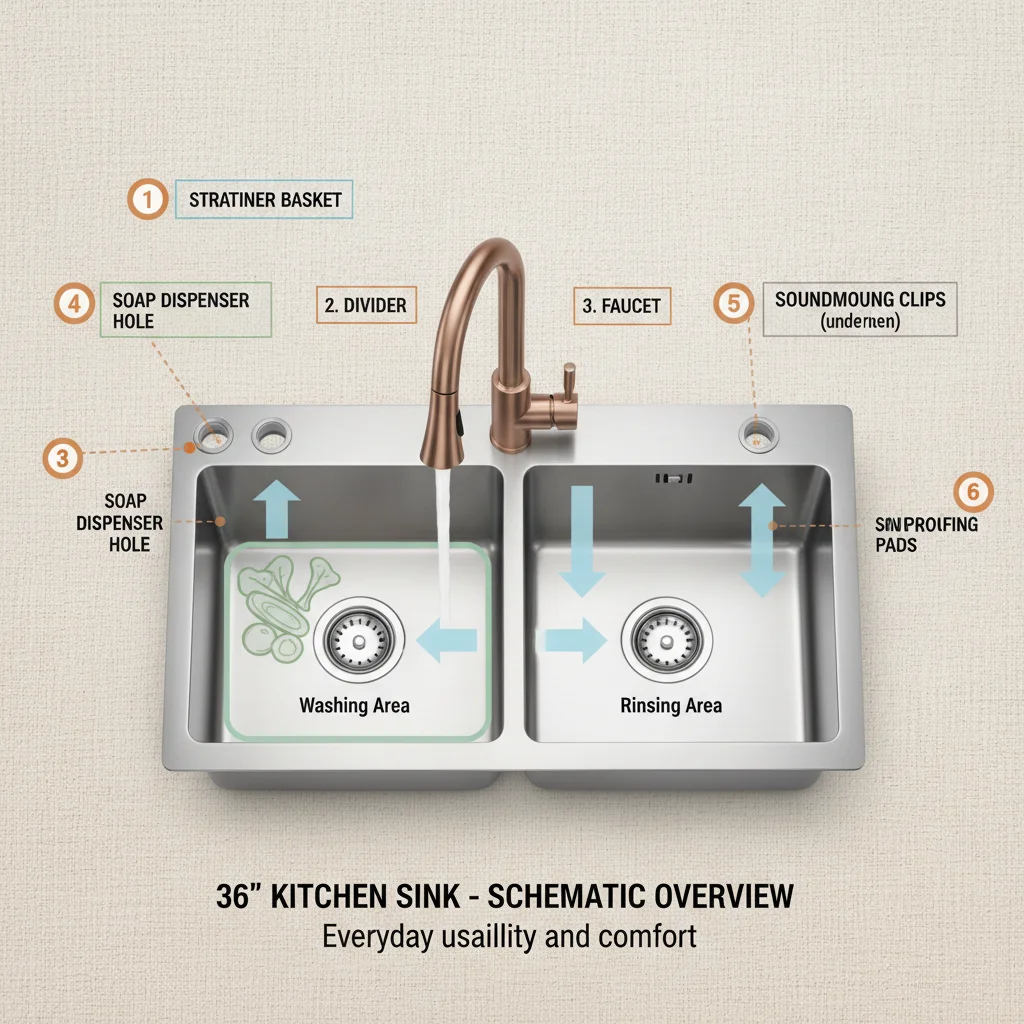
I recently spent time with the custom ultrasonic sink (Model C2-6045) — and, to be honest, it's one of those industry products that quietly does the heavy lifting. Many customers say it’s a neat middle ground between light lab cleaners and full industrial tanks; it seems that OEM flexibility is what sells it.
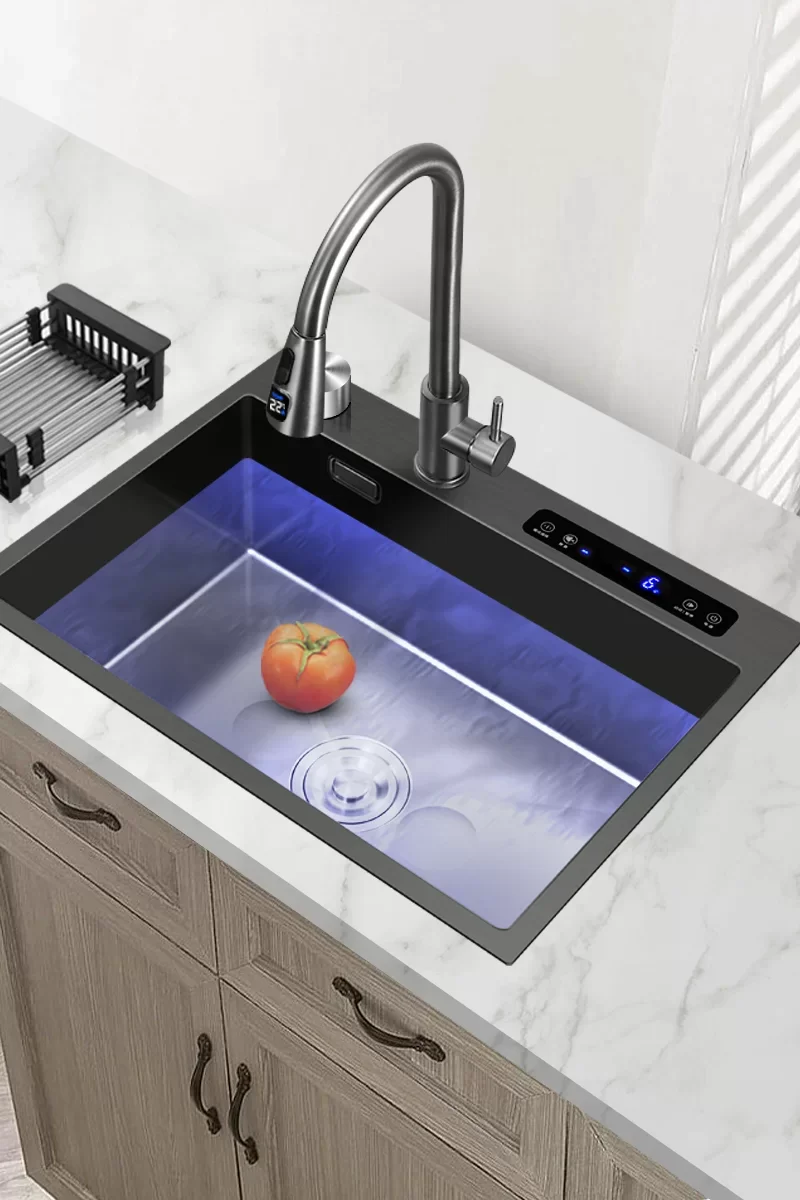
Quick specs & what matters
Model | C2-6045 |
Size | 600 × 450 mm |
Depth | 180–220 mm (≈) |
Material / Thickness | SUS304 / 1.0 mm or 1.2 mm |
Finish / Colors | PVD or Brushed; Nano Black or Stainless |
Electrical | Rated Power 200W; 220V/50Hz |
Process flow — how these are made & validated
Materials: SUS304 stainless steel → laser cutting → CNC bending → welding → surface finish (PVD or brushed). Ultrasonic module (piezoelectric transducer array) is integrated, wiring and control box fitted, then sealed. Testing includes leak testing, electrical safety (insulation & earth continuity), ultrasonic power mapping, and lifecycle vibration tests. Standards commonly referenced: ISO 9001 quality oversight, CE marking for EU markets, RoHS for electronics; electrical tests follow relevant national/international safety protocols. Real-world life may vary, but expected service life ≈ 8–12 years with normal maintenance.
Applications & real-world scenarios
Ideal for jewelry, precision components, dental/lab prep, small parts degreasing, and bench-top R&D. In electronics repair shops it handles board-level cleaning (flux residues), while watchmakers like the compact footprint. Surprisingly versatile — I've seen a café use one for delicate glassware removal of coffee oils (don't ask me why, but it worked).
Vendor comparison (practical view)
Feature | Yashite (C2-6045) | Vendor A | Vendor B |
Material / Thickness | SUS304 / 1.0–1.2mm | SUS304 / 0.8–1.0mm | SUS316 option |
Ultrasonic Power | 200W (rated) | 150–180W | 220W–300W |
Customization / OEM | OEM/ODM available | Limited | Extensive |
Customer feedback & maintenance notes
Customers report consistent cavitation and easy-to-clean finishes. Some requested deeper bowls for specific parts — which is where customization helps. Maintenance is straightforward: periodic descaling, transducer checks, and replacing solution every few cycles for best performance.
If you're deciding between a standard sink and a custom ultrasonic sink, think about frequency of use, part size, and whether you need OEM branding or special finishes. For lab-grade repeatability, this model is a sensible, no-drama choice.
Interested in specs or a quote? The product page has full details and contact options.
1. ISO 9001 — Quality management frameworks (manufacturer practices).
2. CE & RoHS — Applicable EU conformity and hazardous substance limits.
3. IEC/EN electrical safety test norms for small appliances (industry guidance).